BrandDNA

Rollout guide

The Guide to Multi-Site Rollouts: Scaling One Brand Across a National Network

A strong prototype is not automatically a strong rollout system. The first space may prove an idea at one location, but a network must apply that idea across different sites, formats, budgets, teams and operating conditions without losing what makes the brand recognisable.

By Brand DNAEditorial review: Brand DNA StudioUpdated 24 August 2026
Vodacom retail store forming part of a multi-site brand network

What this guide covers

This guide explains how a branded environment can move from one approved direction to a repeatable multi-site programme. It is relevant to retail networks, fuel and convenience formats, restaurants and coffee shops, customer-service centres, telecoms environments, franchises and other businesses that need a consistent physical presence across locations.

The exact delivery structure varies. The brand designer may define the spatial system while architects, engineers, project managers, suppliers, contractors or local professionals carry other responsibilities. A rollout manual is not a substitute for those appointments. It is a controlled reference that helps the right parties make consistent decisions.

What makes rollout design different?

A single-site project can optimise the solution for one building. A rollout programme must also decide how the solution responds when the next building is smaller, deeper, more exposed, less regular, differently serviced or subject to another landlord’s criteria.

The design task therefore has two levels:

  1. Create a compelling customer and operational environment.
  2. Convert the essential decisions into a system that can be repeated and adapted.

That second level changes the questions. Which elements define the brand? Which dimensions can change? Which materials have approved alternatives? How should the entrance work in an inline store, a corner unit or a freestanding site? Which decisions need central approval, and which can a local team make?

Consistency is not identical duplication. It is the controlled expression of shared principles.

Begin with a clear programme strategy

Before producing a manual, the organisation needs to define the programme it is trying to support. The right system for ten similar refurbishments may differ from the system for a national network with multiple store sizes, operators and delivery partners.

The programme strategy should consider:

  • the number and types of locations in scope;
  • the expected pace and sequence of implementation;
  • whether the format is new, refreshed or already established;
  • ownership, franchise or operating structures;
  • geographic and site variation;
  • customer, product and service differences between formats;
  • procurement and supplier arrangements;
  • who approves design, cost and deviations;
  • who maintains and revises the standards.

Not every answer needs to be final at the start. The aim is to expose the decisions that the design system will need to control.

Define the core brand experience

The programme should identify the experience that must remain recognisable even when the site changes. This is broader than logos, colours and a set of standard fixtures.

Core principles may relate to arrival, visibility, service sequence, product discovery, consultation, payment, collection, comfort, staff interaction or digital content. They may also define the emotional character of the environment: confident and efficient, warm and local, energetic and expressive, calm and premium.

These principles become evaluation criteria. When a difficult site cannot accommodate the prototype exactly, the team can ask which alternative best protects the intended experience. Without principles, decisions often default to copying visible features, even when those features do not solve the new site.

The core should be concise enough to remember. A manual can contain hundreds of details, but the programme needs a small set of ideas that explains why those details exist.

Use the prototype to learn, not merely to launch

A prototype can be a concept model, a detailed mock-up, a pilot site or the first realised format. Its purpose is to test important decisions before they are repeated.

The team should agree what the prototype is intended to prove. That might include customer flow, service capacity, merchandising flexibility, digital integration, fixture construction, material durability, maintenance access, installation sequence or cost assumptions.

Observation after opening is particularly valuable. Staff may find that a storage position adds unnecessary travel. Customers may miss a service point that looked prominent in a render. A display component may be difficult to reconfigure. A finish may show wear sooner than expected.

These findings are not a failure of the prototype. They are the evidence that turns it into a better rollout system, provided the lessons are recorded and approved rather than corrected informally at one location.

Chery showroom displaying a consistent automotive retail identity
Chery showroom displaying a consistent automotive retail identity.

Build a family of formats

Networks often need more than a large, medium and small version of the same plan. Site types can vary by context, offer and operating model as well as area.

A format family might distinguish flagship, standard, compact, kiosk, shop-in-shop, refurbishment or service-only environments. The names are less important than the decisions they control.

For each format, define:

  • the intended customer and business role;
  • mandatory and optional activities;
  • planning priorities and adjacency rules;
  • critical sightlines and arrival behaviour;
  • fixture or component requirements;
  • technology and service assumptions;
  • capacity or range implications;
  • permitted simplifications and exclusions.

Format definitions help teams select the right starting point. They also prevent a compact site from becoming a compromised miniature of a flagship that was designed for a different purpose.

Separate fixed, flexible and site-dependent decisions

One of the clearest ways to structure a rollout is to classify decisions.

Fixed decisions protect the essential identity or operational standard. They may include a core brand element, a critical customer sequence, a signature service point or a defined graphic hierarchy.

Flexible decisions allow approved variation. A fixture family may have several widths; materials may have approved alternates; a feature may move within a defined zone; or a colour may be used in different proportions.

Site-dependent decisions respond to existing structure, access, services, landlord criteria, climate, regulation or local operating needs. They require competent project design and coordination rather than an automatic manual selection.

This classification makes adaptation more deliberate. It also improves design review: the team can focus on deviations that affect the brand or customer experience instead of treating every local adjustment as equally significant.

Design components as systems

Repeatable fixtures, counters, signage and architectural elements should be developed as systems rather than isolated objects. A component system considers size, configuration, materials, interfaces, manufacture, transport, installation, access, maintenance and future replacement.

Useful component information may include:

  • the purpose and location of the element;
  • standard types and approved variants;
  • key dimensions and tolerances;
  • material and finish references;
  • graphic or digital interfaces;
  • service and fixing requirements;
  • accessibility and user considerations;
  • shop-drawing, sample and approval requirements;
  • cleaning, repair and replacement guidance.

The rollout manual should be clear about the level of information. A design-intent drawing does not necessarily replace specialist production information. Supplier development and professional coordination remain named responsibilities.

Create a usable rollout manual

A manual succeeds when project teams can find the right information and understand how to apply it. Page count is not a measure of usefulness.

A practical structure often moves from principles to application:

  1. Brand and experience principles.
  2. Programme roles, terminology and approval rules.
  3. Format and site classification.
  4. Planning and customer-journey guidance.
  5. Architectural language, materials and lighting.
  6. Fixtures, components and equipment interfaces.
  7. Signage, graphics and digital touchpoints.
  8. Site adaptation and deviation rules.
  9. Drawing, sample and review requirements.
  10. Revision, ownership and distribution controls.

The manual should distinguish requirements from examples. If an image shows one successful application, the text should explain which aspect is mandatory and which is specific to that site.

Navigation matters. Consistent section numbering, cross-references, searchable text, clear tables and concise diagrams help people use the document under programme pressure.

Plan the site adaptation process

Every new location needs a controlled path from site information to an approved design. The process might include a survey, format selection, test fit, concept adaptation, technical coordination, cost review, brand approval and issue for implementation.

The exact sequence depends on appointments, but the inputs and decision gates should be visible. A site should not proceed simply because an opening date exists.

A site-adaptation brief can record:

  • confirmed address, format and area;
  • survey status and source reliability;
  • landlord, building and access constraints;
  • offer, equipment and staffing assumptions;
  • local deviations from the standard;
  • required consultants and approvals;
  • programme milestones and long-lead decisions;
  • responsible reviewers and approvers.

This record helps prevent assumptions from disappearing into drawings or email threads.

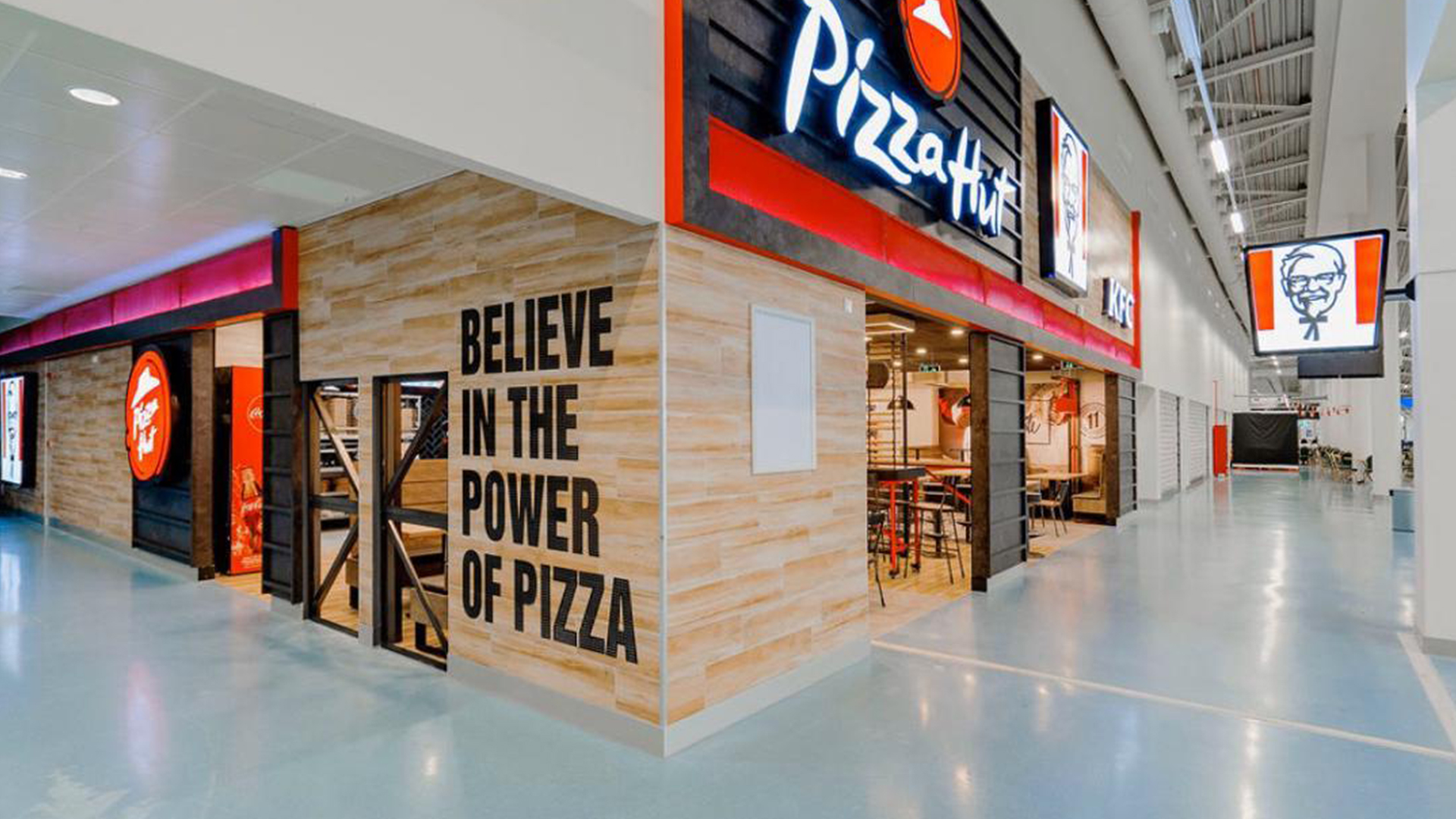
Pizza Hut restaurant environment designed for a repeatable brand format
Pizza Hut restaurant environment designed for a repeatable brand format.

Control deviations

No realistic national programme can forbid every deviation. The objective is to distinguish a necessary adaptation from an avoidable erosion of the standard.

A deviation process should state what needs approval, who can approve it and what evidence is required. The request may need to show the standard, site constraint, proposed alternative, effect on customer experience, cost and programme, and whether the solution should influence future standards.

Approved deviations should be recorded. If the same exception appears repeatedly, the manual may be unrealistic or incomplete. A recurring local solution may deserve to become an approved variant; a recurring compromise may signal a problem in site selection or programme governance.

The aim is learning with control, not bureaucracy for its own sake.

Coordinate suppliers and procurement

Rollouts depend on reliable supply as well as design consistency. A component may be perfectly documented but unsuitable for the programme if it has an impractical lead time, cannot be serviced nationally or relies on an unstable finish.

The project team should consider supplier capacity, quality control, regional delivery, replacement parts, warranties, packaging, installation and approved alternatives. Where a single source is essential, the commercial and programme risk should be visible.

Samples and prototypes help set a benchmark. Production checks can then compare later items with an approved reference rather than subjective memory.

Procurement responsibility must be explicit. The design manual can define intent and approval requirements, but it does not itself appoint suppliers, guarantee availability or transfer contractual responsibility.

Manage information and revisions

A rollout system changes over time. Products evolve, technology changes, materials are discontinued, operational lessons emerge and brand direction develops. Revision control keeps those changes usable.

Each controlled document should show a version, date, status, owner and change summary. The programme also needs a distribution method so that designers, franchisees, suppliers and contractors know which version is current.

Changes should be assessed before release. Does the update apply to new sites only or existing sites as well? Does it affect cost, services, procurement or training? Are old components still acceptable? Who needs to approve the change?

Uncontrolled copies are a common source of inconsistency. A clear source of truth is more valuable than a collection of manuals stored in separate inboxes.

Set up brand and design governance

Governance defines how the programme makes and records decisions. It should be proportionate to scale: enough control to protect the brand and reduce rework without delaying ordinary site decisions unnecessarily.

Useful governance elements include:

  • a named programme owner;
  • clear client approval authority;
  • design and technical review stages;
  • standard submission templates;
  • deviation thresholds;
  • response times and escalation routes;
  • supplier and sample approval records;
  • site review or audit criteria;
  • lessons-learned and revision meetings.

Governance works best when reviewers explain decisions against the agreed principles. A simple “approved” or “rejected” provides little guidance for future sites.

Measure the programme

The programme should define what success means before collecting data. Measures may relate to opening readiness, programme certainty, consistency, customer comprehension, service performance, maintenance, defects, energy, sales or staff experience. Not every measure is appropriate for every programme, and design should not claim sole responsibility for complex business outcomes.

Useful operational measures might include approval turnaround, number and type of deviations, rework, component defects, installation time or recurring maintenance issues. Customer and business measures should be interpreted alongside location, range, pricing, marketing and operations.

Photographs and audits can support visual consistency, but a checklist should focus on the parts of the experience that matter. Counting identical objects is not the same as evaluating whether the site works.

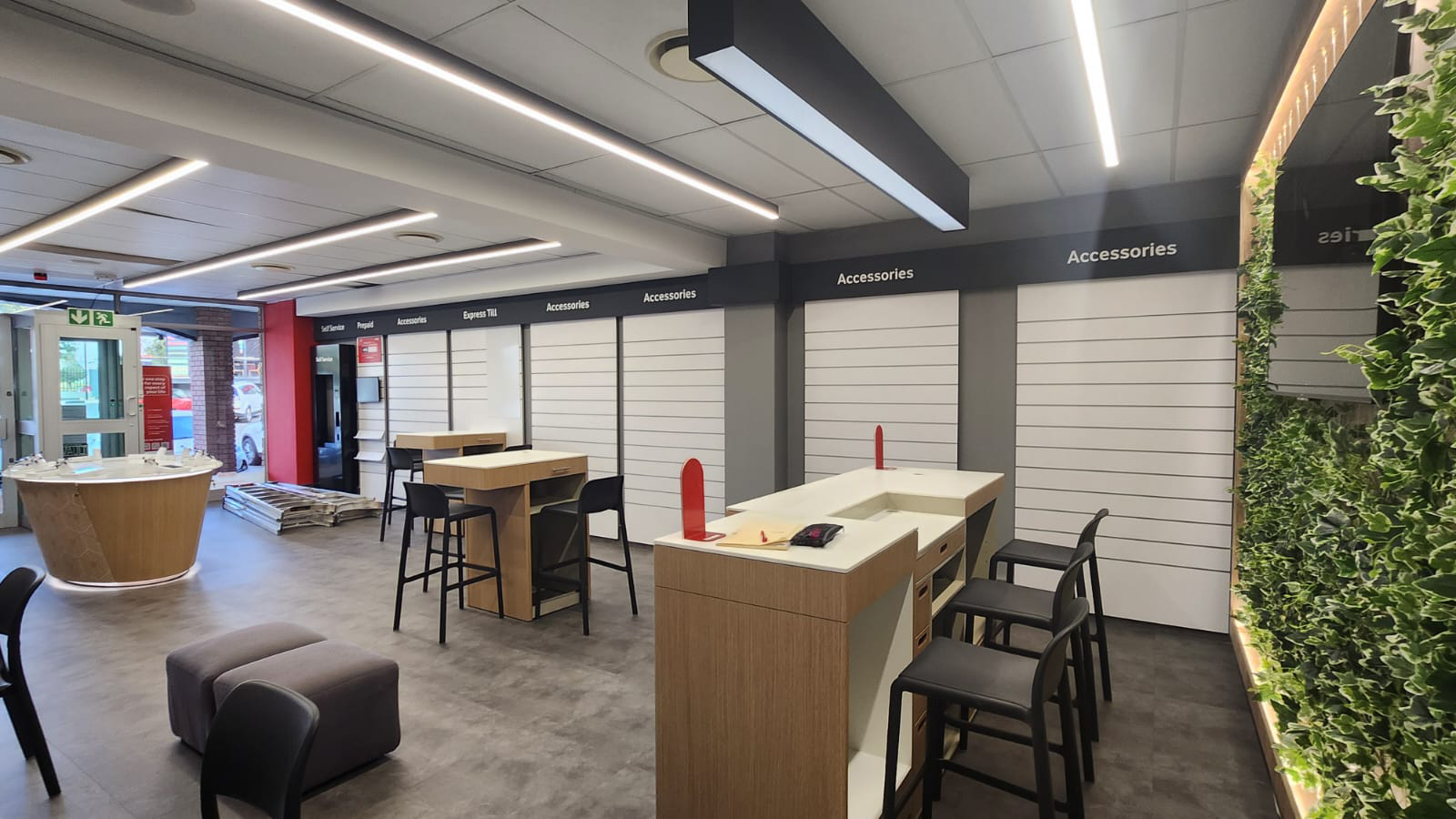
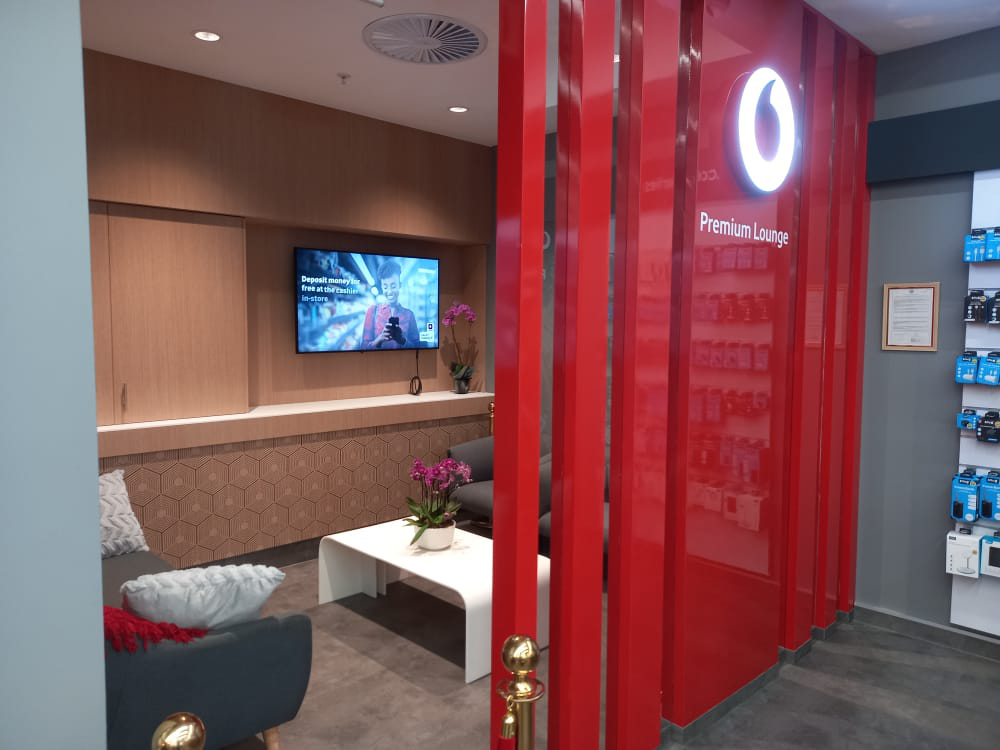
Vodacom branded retail interior within a multi-site network
Vodacom branded retail interior within a multi-site network.

Common rollout failure patterns

Multi-site programmes often become inconsistent for predictable reasons:

  • the prototype was treated as a picture rather than a tested system;
  • the manual documents one site but does not explain adaptation;
  • mandatory, optional and illustrative information is mixed together;
  • local teams receive incomplete or outdated standards;
  • roles between brand, design, technical and delivery teams are unclear;
  • cost decisions occur after site designs are substantially complete;
  • suppliers make unreviewed substitutions;
  • deviations are solved privately and never fed back into the system;
  • opening dates repeatedly override surveys, approvals and coordination;
  • the programme measures visual similarity but ignores customer or operational performance.

These problems are best addressed in the structure of the programme, not by adding more pages to the manual after they occur.

Questions to ask before appointing a rollout partner

Ask the team to explain its actual role and evidence:

  • Have you developed a prototype, a design system, site adaptations, technical information or
  • programme governance, and which of those services are proposed here?
  • How will you identify the core experience before defining components?
  • How will different site and format types be classified?
  • What information will the manual contain, and who will maintain it?
  • How will surveys, architecture, engineering and statutory work be handled?
  • Who reviews local designs, shop drawings, samples and substitutions?
  • How will deviations and lessons be recorded?
  • Which realised multi-site examples demonstrate the relevant responsibility and scale?

The strongest response is precise about both capability and boundaries.

From repetition to a coherent network

The purpose of rollout design is not to make every location visually identical. It is to make the brand and customer experience recognisable while allowing responsible responses to real sites and operational needs.

That requires more than a concept image. It requires principles, tested formats, usable information, explicit responsibilities, controlled adaptation, reliable suppliers, revision management and a feedback loop from completed sites.

Brand DNA works across branded commercial environments, including retail, fuel, food, telecoms and corporate settings. To discuss a prototype, format refresh or multi-site design programme, begin with the intended network, the sites or formats already known, the desired pace and the responsibilities that still need to be defined.

Frequently asked questions

What is a brand rollout manual?

It is a controlled reference that explains how an approved branded environment should be planned, detailed, adapted and reviewed across locations. Its contents depend on the programme and appointment.

Can one design be copied into every site?

Rarely without adaptation. Site geometry, services, access, local context, landlord criteria and operating requirements differ. The programme should protect core principles while managing necessary variation.

Should the prototype be built before the manual is finished?

A realised prototype can provide valuable evidence, but the sequence depends on programme timing. Early standards may be issued provisionally and then revised after testing, with clear version control.

Who prepares site-specific drawings?

That depends on the delivery model. The rollout designer, local architect, engineers, contractor and specialist suppliers may each prepare different information. Responsibilities must be stated for every site and package.

How often should the standards be updated?

There is no universal interval. Updates should respond to approved brand changes, product or technology needs, repeated deviations, supplier changes and evidence from realised sites. The programme should also schedule periodic review so that issues are not allowed to accumulate.

Does a rollout programme include construction?

Not automatically. Design systems, manuals, site adaptation, procurement, project management, construction, fit-out and site auditing are separate responsibilities unless the appointment explicitly combines them.

Preparing one brand for more than one site?

Tell us what the space, programme or network needs to achieve. We will help you define a practical next step.

Start a conversation

ADDRESS CONTACT Unit 35,
Frost Street Lofts
43 Frost Ave,
Braamfontein Werf
Johannesburg, 2092,
South Africa
info@branddna.co.za PHONE FOLLOW US +27 87 702 9550 DYNAMIC. NOVEL. AUTHENTIC.

Our innovative design solutions will enhance your brand presence and image, keeping you relevant.
BRANDDNA • COPYRIGHT © 2025 ABOUT US